To prepare for office furniture pickup, make an item list, decide what stays, and clear out personal items and private files. Check the paths, doors, elevators, and pickup time before the crew arrives. Good planning helps Flagstaff AZ Junk Removal remove furniture safely while keeping work on track.
Table of Contents
- What should you do before scheduling office furniture pickup?
- How can you decide which office furniture to remove?
- How should you prepare office furniture for removal?
- How can you protect employees and the workplace during pickup?
- What should businesses know about disassembling office furniture?
- How does office furniture pickup usually work?
- What final checks should you complete after office furniture removal?
- Key takeaways
- Frequently Asked Questions
- Conclusion
What should you do before scheduling office furniture pickup?
Before you schedule pickup, list the furniture, set the work area, and choose a good time. A clear plan tells the removal team what must go and how to reach it. It also helps office managers avoid changes when the crew is ready to load.
Create a complete inventory of unwanted furniture
Walk through every room and write down each item for removal. Include desks, cubicles, chairs, filing cabinets, shelves, tables, reception pieces, and breakroom furniture. Note if an item is large, attached, damaged, or kept in another room.
Your list can show the item name, room, number, and condition. Photos can help when many pieces look the same. Mark items that must stay so workers do not take the wrong property. For a large workplace, a room-by-room list is easier to check than one long list.
Look in places that are easy to miss. Storage rooms, supply closets, basements, and loading areas may hold old furniture. A full walk-through lowers the chance of finding extra pieces after the appointment is set.
Confirm the pickup scope and timing
Decide if the job covers one room, one floor, or the whole workplace. Also decide if the team will take furniture only or handle a broader office cleanout. Clear details help the provider plan workers, loading space, and equipment.
Choose a time that fits the workday. Some businesses prefer early morning, late afternoon, or a quiet period with fewer visitors. Building rules may limit elevator use, loading dock access, parking, or loud work. Flagstaff AZ Junk Removal can help businesses review the plan before pickup.
How can you decide which office furniture to remove?
Sort office furniture into three groups: keep, reuse, and remove. This makes choices easier and helps protect useful items from accidental removal. It also gives the office manager a simple way to explain the job.
Separate reusable, recyclable, and unwanted items
Reusable furniture may include clean desks, sound chairs, shelves, and tables that fit another room. A business may move these pieces, store them, or offer them to a nonprofit. Reuse is often a good choice when an item is safe and still works well.
Recyclable pieces may contain metal, cardboard, wood, or some plastics. Local rules differ by material and facility. A removal team can explain which items may be sorted for recycling and which need another method. Keep damaged furniture with sharp edges, broken frames, or heavy mold away from items meant for reuse.
Unwanted furniture no longer helps the business and has no clear next use. Mark each piece with a removable label. Use plain words such as “remove” and “keep” so every worker can follow the plan.
Account for desks, cubicles, chairs, and bulky pieces
Office furniture often has many connected parts. A workstation may include a desktop, legs, drawers, panels, shelves, and cable trays. A cubicle may have walls, posts, work surfaces, and overhead storage. Listing the full setup helps prevent missing parts.
Large conference tables and reception desks need extra care. Measure narrow doors, halls, and turns when an item is very large. A bulky piece may need to move in sections, ride on a dolly, or leave through another door.
Chairs and small parts are easy to miss under desks or in storage rooms. Add them to the list. This matters during an office move, renovation, or downsizing job in Flagstaff.
How should you prepare office furniture for removal?
Before pickup, employees should empty the furniture and remove items that do not belong with it. Check drawers, shelves, cabinets, and desk spaces one at a time. This protects personal property, records, and small tools from being taken by mistake.
Empty drawers, shelves, and storage compartments
Open every drawer and cabinet, including locked or seldom-used sections. Check behind shelves and under removable trays. Small items such as keys, pens, chargers, tools, and business cards can be easy to overlook.
Put everything that must stay in a labeled box or another office. Do not leave loose items inside furniture unless the work plan clearly includes them. Empty pieces are safer to lift because their contents cannot shift during moving.
If a filing cabinet is heavy, employees should not carry it alone. Remove the contents first, then let trained workers handle the piece. Keep cabinet keys with the office manager unless the cabinet is part of the removal plan.
Remove personal items, electronics, and sensitive documents
Employees should take home or store personal belongings before pickup day. This includes photos, plants, small appliances, notebooks, and decorations. The same rule applies to monitors, phones, printers, and docking stations unless they are included in the work order.
Sensitive documents need extra care. Remove paper files, client records, payroll details, passwords, and other private material before furniture leaves. Follow the company’s document destruction policy instead of putting private records in normal bins.
A final desk sweep can stop mistakes. Each employee can check the top, drawers, underside, and nearby floor. This small step protects privacy and avoids searching through a loaded truck later.
How can you protect employees and the workplace during pickup?
The workplace needs clear paths, safe entry points, and a plan for people who remain on site. Good preparation lowers trip risks and keeps removal work apart from normal business tasks. It also helps protect walls, doors, floors, and finished surfaces.
Clear pathways and identify access points
Move boxes, cords, bins, plants, and loose items out of hallways. Identify the best entrance, elevator, loading zone, and truck position. Tell the pickup team about stairs, tight turns, security doors, and areas they cannot use.
Protect floors and walls when the building requires it. Building managers may have rules for elevator pads, carts, loading docks, or moving times. Confirm those rules before the appointment rather than when workers arrive.
A clear path should run from each furniture group to the exit. If a route crosses a busy work area, mark it and keep people away during loading. Never block fire exits, sprinkler controls, electrical panels, or required access routes.
Plan around employees, customers, and daily operations
Tell employees when removal will happen and which areas they should avoid. Customer-facing businesses may choose a quiet time so visitors do not enter the work zone. Offices with calls or meetings may need a temporary work area.
Choose one person to answer questions and approve changes. This contact can confirm which items are included and help the crew reach locked rooms. Other employees should not move furniture while the removal team is working.
Use signs or cones to show closed areas. Keep pets, visitors, and children away from loading work. These steps help Flagstaff AZ Junk Removal serve offices across Flagstaff and nearby communities with less disruption.
What should businesses know about disassembling office furniture?
Disassemble furniture only when it is safe and makes removal easier. Small desks may move whole, while large workstations, cubicles, and conference tables may need to come apart. The right choice depends on size, weight, design, and the path outside.
When to disassemble desks, cubicles, and conference tables
A desk may need disassembly if it cannot fit through a doorway or turn in a hall. A large conference table may need its legs or sections removed. Cubicles often require panels, posts, shelves, and work surfaces to be separated.
Do not force a piece through a tight space. This can harm the furniture, building, or people nearby. If an item is attached to a wall or floor, confirm who will remove the attachment before pickup.
Follow the furniture maker’s design when possible. Do not cut panels, bend metal, or break parts just to make a piece smaller. Safe removal matters more than speed.
What to do with hardware, panels, and components
Keep screws, brackets, keys, and small hardware in a labeled bag when furniture may be reused. Put the bag with the matching desk or cabinet. If furniture will be discarded, gather loose parts so they do not create a trip hazard.
Keep panels and components with the correct furniture group until the pickup team checks them. Some parts may be reused, while others may be sorted as bulky material. Tell the team about missing pieces, damage, or items that must remain in place.
When you are unsure, ask the removal provider if the crew handles disassembly. Flagstaff AZ Junk Removal can help property owners and professionals decide what to prepare before workers arrive.
How does office furniture pickup usually work?
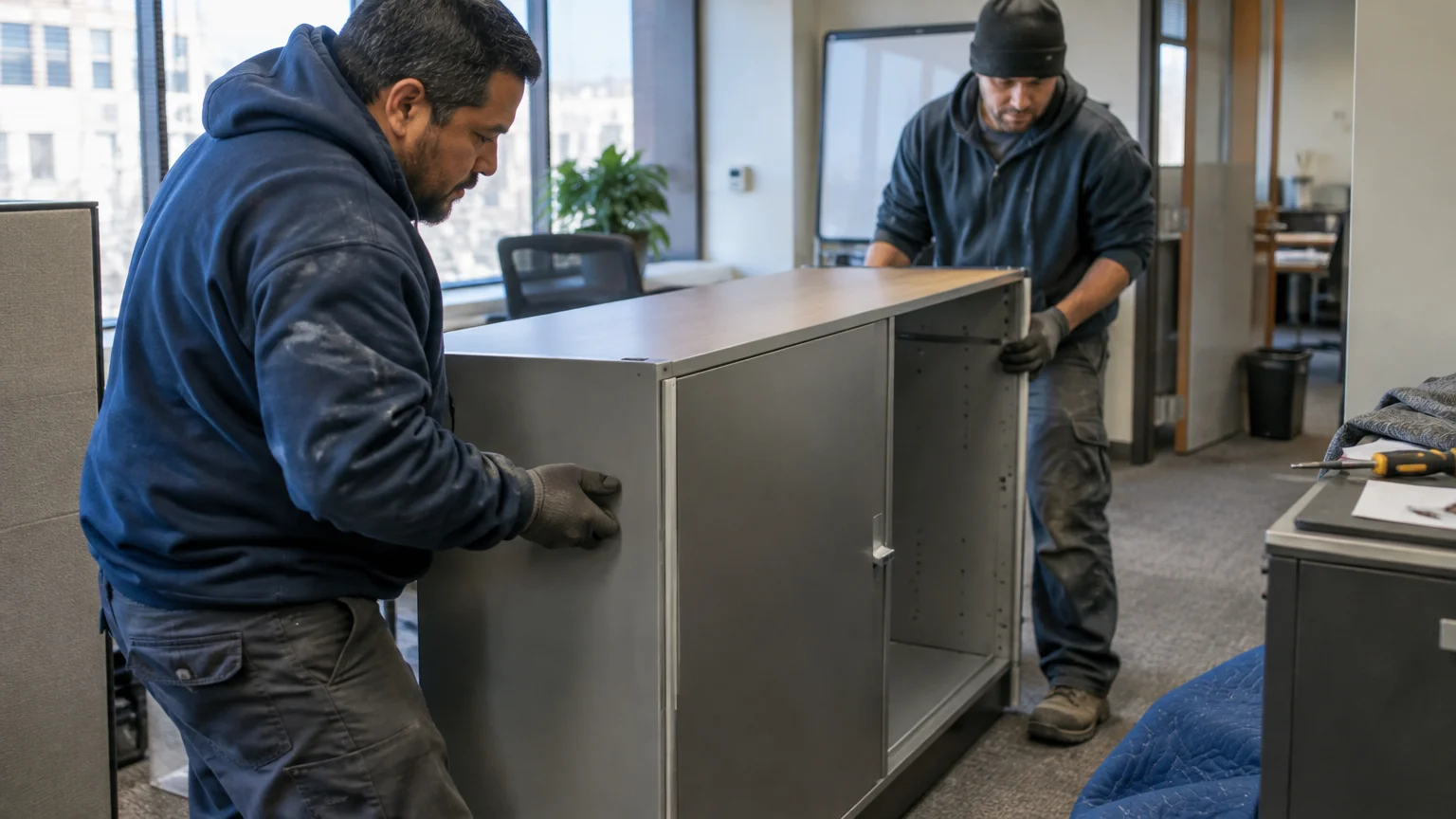
Office furniture pickup often starts with a walk-through, followed by removal, loading, and sorting. The team checks the agreed items, protects the route, and moves the furniture to the vehicle. The exact steps depend on the building, furniture, and access.
What happens when the removal team arrives
A chosen office contact should meet the crew and review the inventory. The contact can point out items to remove, items to keep, and rooms with special access rules. This quick review helps prevent confusion before lifting starts.
The team may inspect doors, elevators, stairs, and the loading area. Furniture is moved in a careful order, often starting with items closest to the exit or pieces needing more room. Employees should stay clear of the route during the work.
If the list differs from the furniture on site, the office contact can decide what happens next. Clear approval prevents the crew from taking property that should remain.
How loading, sorting, and disposal are handled
Furniture is loaded so heavy pieces stay stable and lighter items remain protected. Components may be grouped by material or kept together when they can be reused. The provider may sort suitable items for donation, recycling, reuse, or another approved option.
Do not assume every facility accepts every item. Mattresses, appliances, electronics, and furniture with special materials may need different handling. If an office cleanout includes these items, mention them before pickup.
The goal is a clear workspace and a proper next step for unwanted furniture. A local team serving the Flagstaff area can explain available options without asking office staff to handle heavy lifting.
What final checks should you complete after office furniture removal?
After removal, inspect each room, route, and storage area. The final check confirms that requested furniture is gone and that no personal items or loose hardware remain. It also gives the business time to plan the cleared space.
Inspect the workspace and confirm all requested items are gone
Compare the empty rooms with the original inventory. Check behind doors, under counters, inside storage areas, and near loading points. Look for missed items, furniture that should stay, or parts placed in the wrong area.
Walk the removal path too. Check floors, walls, doors, corners, and elevator areas for visible issues. Confirm that exits, electrical panels, vents, and other required access points remain clear.
If something needs attention, raise it before the team leaves when possible. A short written note can help the business keep a record of what was removed and what remains.
Plan the next use of the cleared office area
Once the space is empty, decide how it will serve the next business need. It may become a work area, meeting room, storage zone, training room, or open space for renovation. Early planning helps stop the area from filling with random boxes.
Clean surfaces and floors as needed. Review the new layout with employees so desks, paths, and shared areas stay easy to use. If more items must leave later, add them to a new list instead of mixing them with furniture already removed.
A well-planned finish turns furniture removal into a useful workplace change. It can help the business move ahead without leaving old equipment in corners or storage rooms.
Key takeaways
- Make an inventory of desks, cubicles, chairs, tables, cabinets, and other office furniture.
- Separate keep, reuse, recycle, and remove items before the pickup date.
- Empty furniture fully and remove personal items, electronics, and private records.
- Clear paths and plan timing around employees, customers, building rules, and daily work.
- Complete a final walk-through before the removal team leaves.
Frequently Asked Questions
Should employees empty desks before office furniture pickup?
Yes. Employees should remove personal items, electronics, papers, and anything they need to keep. Check drawers, shelves, and cabinets too. An empty piece is easier and safer to move. Private records should follow the company’s document policy instead of staying inside furniture.
Can a removal team take apart office cubicles?
Many removal teams can handle cubicle parts, but ask before scheduling. Cubicles may include panels, posts, shelves, desks, and hardware. The team can then plan for the space and tools needed. Wall or floor attachments may need separate approval or building help.
How far ahead should an office plan furniture pickup?
The needed lead time depends on the project size, building access, and schedule. A small pickup may need less planning than a full office cleanout. Start once you know which items are leaving. Early planning allows time for sorting, record removal, access rules, and employee notice.
What happens to unwanted office furniture after pickup?
Handling depends on the item’s condition, material, and local facility rules. Some furniture may be reused, donated, recycled, or sent for disposal. Share details about damaged items, electronics, appliances, or unusual materials before pickup. This helps the team plan the proper next step.
Can office furniture pickup happen while employees are working?
It may be possible, but the work zone and moving path must stay clear. Many businesses choose a quiet period to reduce noise and interruptions. Tell employees which areas are closed and assign one person to guide the team. Building rules may also limit pickup times.
Conclusion
The easiest way to prepare for office furniture pickup is to plan before removal day. A full inventory, clear sorting choices, empty furniture, safe paths, and one office contact can prevent many delays. These steps work for a small office update or a larger office cleanout.
Flagstaff AZ Junk Removal helps businesses plan furniture removal and nearby parts of Arizona. Contact us to arrange the next step for an office furniture pickup that fits your workplace plan.