The better choice in mattress pickup vs dumpster rental depends on the number of items, access, time, and disposal rules. Pickup often works best for one mattress, box spring, or bed frame. A dumpster may suit a larger cleanout that lasts several days. Flagstaff residents should also consider lifting needs and approved materials.
Table of Contents

- What Is the Difference Between Mattress Pickup and Dumpster Rental?
- Is Mattress Pickup Better Than Renting a Dumpster?
- How Much Does Mattress Pickup Cost Compared With Dumpster Rental?
- What Can You Put in a Dumpster With a Mattress?
- How Does Professional Mattress Pickup Work?
- Can You Put a Mattress in a Dumpster?
- What Are the Disposal Options for an Old Mattress?
- Which Option Is Safer for Removing a Mattress and Bed Frame?
- Should You Choose Mattress Pickup for a Home or Office?
- How Do You Choose the Right Bulky Bed Removal Option?
- Frequently Asked Questions
- Key Takeaways
- Conclusion
What Is the Difference Between Mattress Pickup and Dumpster Rental?
Mattress pickup brings a removal crew to your property. The crew carries the bed outside and loads it for transport. A dumpster rental leaves a container at your property. You then carry and load the items yourself.
Pickup includes the lifting and loading work. A dumpster gives you more time to work at your own pace. The right choice depends on the job, the property, and the kinds of items leaving the home.
How does each removal option work?
With mattress pickup, you share the item type, amount, and access details. The crew arrives during a planned time window. Workers carry the mattress, box spring, bed frame, and other approved items from the building.
The crew then loads the items for sorting or disposal. This may include a mattress, frame, dresser, or other bedroom furniture. You do not need to move every bulky item to the curb first.
A dumpster rental follows a different process. The provider places a container in an approved area, such as a driveway or work space. You take apart the bed, carry each part outside, and load the container.
The provider returns later to remove the container. You must follow its fill level, weight, placement, and material rules. You also need to keep the delivery path clear.
The best choice depends on the work involved. One mattress in an upstairs room may be hard to move alone. A home cleanout with furniture, boxes, and approved debris may need the space of a dumpster.
Which type of project suits each option?
Pickup often fits a quick furniture removal job. It can help renters, homeowners, landlords, and property managers remove large beds without leaving them outside. It may also work well when there is no safe place for a container.
Pickup can be useful for apartments and homes with stairs. It may also fit a rental turnover or a single room project. Flagstaff AZ Junk Removal can help customers compare the amount, access, and material involved.
A dumpster may fit a remodeling job or large move-out. It gives you several days to load approved waste. Still, you must handle all lifting and check the list of accepted items.
A dumpster also needs a suitable place to sit. The ground must support it, and the truck must have room to reach the site. A permit may be needed if the container sits on a public street in Flagstaff.
Is Mattress Pickup Better Than Renting a Dumpster?
Mattress pickup is often better for one or a few bulky beds. It removes the need to lift, load, and plan for a container. A dumpster may be better when many approved items will leave the property over several days.
Neither option is right for every job. Think about the work, space, time, and people who will do the lifting. A simple comparison can prevent delays and unsafe moves.
When is scheduled pickup the simpler choice?
Scheduled pickup is often simpler when the main goal is fast mattress removal. You do not need to find a place for a container. You also do not need to move the bed to the curb.
This can help in apartments, narrow driveways, shared parking areas, and homes with stairs. A crew can enter the property, carry the bed out, and load it. That keeps bulky items out of shared halls and walkways.
Pickup can also reduce the number of choices you must make. You describe the items and explain the route. The crew can then plan for the carrying and loading work.
This may help people who cannot safely lift a heavy or awkward bed. It can also help property owners who need a unit cleared before cleaning or repairs begin. The service keeps the project focused on the items that must leave.
Pickup is often a good fit for a mattress, box spring, or frame. Renting a container for a small load may add extra planning. A pickup visit may be more direct for a short residential job.
When might a dumpster offer more flexibility?
A dumpster may offer more flexibility when the project lasts for several days. A property owner may clear one room at a time. A business may remove desks, shelving, boxes, and other approved waste during a move.
You can load the container as work continues. This may avoid several separate removal visits. However, you must follow the fill line, weight limit, placement rules, and banned-item list.
A dumpster needs a safe location. The surface must be strong enough for the container. The delivery truck also needs a clear path and enough turning space.
Local permits may apply when a container sits on a public road. Rules can vary by area. Check the rental terms before delivery so the container does not create a new problem.
How Much Does Mattress Pickup Cost Compared With Dumpster Rental?
The cost of mattress pickup and dumpster rental varies by job. Providers may review the item count, access, labor, travel, container size, rental period, disposal rules, and load weight. The final price should be confirmed with the provider before service.
A small job and a full cleanout have different needs. Stairs, long paths, and extra furniture can change the work. Dumpster terms can also change based on time, weight, and material type.
What affects the price of mattress removal?
A mattress on the ground floor may take less work than one in a tight upstairs room. Stairs, narrow halls, elevators, sharp turns, and locked gates can affect the job. Long walks from the building to the truck may also add work.
Extra items can change the job details. These may include box springs, bed frames, dressers, nightstands, and other furniture. Describe all items before booking so the provider can plan the load.
The mattress type may matter as well. Foam, hybrid, and spring mattresses can need different handling. Wet, damaged, or contaminated items may have special rules.
Customers should describe the condition clearly. A clear description helps the provider explain what can be accepted. It also helps avoid delays when the crew arrives.
Dumpster rental costs may depend on the container size and rental period. Other charges may relate to excess weight, extra days, difficult placement, or banned materials. Compare the full service terms instead of looking only at container size.
Which fees and charges should customers review?
Before booking, ask what the service includes and what may change the final amount. Important points include:
- Whether labor and loading are included
- Whether the provider removes the mattress from inside the property
- How extra mattresses, frames, and furniture are handled
- Whether the rental period has a fixed end date
- What happens if the load passes weight or fill limits
- Which materials are not allowed
A clear item list helps prevent confusion. Flagstaff AZ Junk Removal can explain the details for a local removal request. Customers should not have to guess whether a mattress, frame, or other item fits the service.
What Can You Put in a Dumpster With a Mattress?
A dumpster may accept a mattress with other large household items. The provider sets the rules. Common items may include bed frames, box springs, dressers, tables, chairs, and other household furniture.
Always confirm acceptance before loading. A container that accepts furniture may still reject certain appliances, liquids, chemicals, or damaged materials. Rules can also depend on the disposal site.
Which bulky items are often accepted together?
Many general cleanout containers accept ordinary household furniture. You may be able to add a wooden bed frame, dresser, couch, or broken table. Some containers may also accept small amounts of nonhazardous household debris.
Space and weight are key concerns. A mattress takes up more room than its weight suggests. A large sectional, solid wood item, or group of appliances may fill the container quickly.
Break down items only when it is safe and allowed. A bed frame can often be taken apart with simple hand tools. Keep screws, slats, rails, and metal pieces together when possible.
Taking apart a frame can make loading easier. It may also reduce empty spaces in the container. Wear work gloves and keep sharp parts away from children and pets.
Which materials may need separate handling?
Paint, fuel, chemicals, propane tanks, batteries, asbestos materials, and medical waste may not belong in a general dumpster. Some electronics may also need another disposal route. Refrigerators and freezers can have special rules.
Do not hide restricted items under furniture. This can create safety problems. It may also lead to extra handling or removal charges.
Ask for a clear accepted-item list before delivery. Tree branches, yard waste, dirt, and old freezers may need a different container or disposal site. The same container may not fit every kind of waste.
How Does Professional Mattress Pickup Work?
Professional mattress pickup starts with a description of the items and property. The crew arrives, checks the load, carries the items out, and loads them for transport. Customers should share details about stairs, elevators, gates, parking, and narrow paths.
The crew needs a safe route from the item to the truck. Clear details help workers plan the move. They also help the provider decide whether extra tools or workers may be needed.
What should customers do before the crew arrives?
Remove personal items from the bed and clear loose objects from the path. Bedding can be bagged separately. Small items should not remain inside the mattress, box spring, or frame.
Make sure doors open fully. Keep pets and children away from the work area. If the mattress is in a storage unit, apartment, or office, arrange access with the manager first.
Share parking instructions before the visit. Tell the provider about elevators, locked gates, loading zones, and building rules. These details can save time and reduce delays.
A useful preparation checklist includes:
- Confirming the number and type of items
- Measuring tight doorways or stair turns
- Clearing floors and walkways
- Sharing elevator, gate, or parking instructions
- Separating items that should not be removed
These steps help the crew work safely. They also help the provider understand whether the job needs special planning. Good preparation can protect walls, floors, doors, and nearby furniture.
What happens during loading and removal?
The crew checks the items and route before lifting. Workers may carry a mattress upright, use straps, or remove a frame in sections. They should protect nearby walls, floors, doors, and furniture during the move.
After loading, the crew may sort items for reuse, recycling, or disposal. The final route depends on item condition, local rules, and available programs. Not every mattress can be reused.
Professional loading can help when a mattress is stained, heavy, or hard to grip. Tell the provider about damage or contamination before the appointment. Some conditions may need special handling.
Can You Put a Mattress in a Dumpster?
A mattress can go in a dumpster only when the rental provider and disposal facility allow it. Some providers accept mattresses in general containers. Others restrict them because mattresses take up space or need separate processing.
Never assume a general dumpster accepts every household item. Ask before delivery. This is especially important when the mattress is wet, torn, stained, or infested.
Why do local rules and rental policies matter?
Mattresses contain fabric, foam, metal, and wood. These parts may be handled in different ways. One facility may sort mattresses for recycling, while another may send them to a landfill or reject them.
Rental policies also control how the mattress should be placed. Some providers require it to lie flat. Others may ask you to wrap it or keep it away from certain materials.
Local waste rules can apply to curbside pickup, transfer stations, and landfill trips. Rules may differ between nearby cities and counties. Check the current terms from the provider and disposal facility.
Flagstaff has its own local conditions and disposal choices. A customer should confirm the rules before loading a container. This can prevent a rejected load or an unexpected trip.
How can customers confirm acceptance before disposal?
The safest method is to ask specific questions before delivery. Name the mattress, box spring, frame, and every other planned item. The provider can explain accepted materials, placement rules, and limits.
Ask about size and fill limits as well. A mattress may fit physically but leave too little space for other planned items. If the answer is unclear, dedicated pickup may be simpler than using a container.
What Are the Disposal Options for an Old Mattress?
Old mattresses may be reused, donated, recycled, taken to a disposal facility, or sent to a landfill. The best option depends on cleanliness, condition, local programs, and facility rules. Damaged or contaminated mattresses often have fewer reuse choices.
Disposal should be planned before the mattress leaves the building. This helps you choose the right service. It also avoids carrying the mattress to a site that cannot accept it.
Can a mattress be recycled, donated, or reused?
A clean mattress in good condition may be accepted by a donation group, shelter, or reuse program. Many groups have strict rules about stains, odors, tears, bedbugs, and age. Ask before transporting the mattress.
Some recycling programs separate a mattress into foam, fabric, wood, and metal. These programs are not available everywhere. You may need to deliver the mattress to a set site or use a collection service.
A bed frame may have more reuse choices than a mattress. Wooden frames can sometimes be donated or reused. Metal frames may go to a scrap or recycling facility.
Keep frame parts together until the destination is confirmed. This makes the item easier to identify. It also helps prevent lost screws and loose metal pieces.
Why do disposal requirements vary by location?
Waste facilities use different equipment and contracts. Some accept mattresses only on certain days. Others charge a separate disposal fee or require advance arrangements.
Weather, storage space, and local health rules can also affect acceptance. A site may change its rules when space is limited. Always check current information before making a trip.
In the United States, customers should check city, county, and facility guidance. Nearby areas may have different answers to the same disposal question. Local removal providers may know which choices are available.
Flagstaff AZ Junk Removal can help Flagstaff residents review practical choices for mattresses, box springs, and bed frames. The final disposal route depends on the item's condition and the facility's rules.
Which Option Is Safer for Removing a Mattress and Bed Frame?
Professional pickup is often safer when a bed must pass through stairs, narrow halls, or tight doors. A dumpster rental still requires the customer to lift and load every item. Anyone with limited strength, balance, or mobility should avoid risky lifting.
Safety matters for homeowners, workers, landlords, and property managers. A rushed move can damage a wall or cause an injury. Plan the route before moving the first piece.
How do stairs, narrow spaces, and lifting affect safety?
Mattresses are wide and hard to grip. Their weight can shift while turning corners or moving down stairs. Bed frames may have sharp edges, loose hardware, or awkward sections.
One person should not try to carry a large mattress alone. Use enough help for the size and route. Stop if the item blocks your view or feels too heavy to control.
Use safe lifting habits for smaller pieces. Bend your knees, keep the load close, and avoid twisting. Heavy or awkward parts should be handled by more than one person or left to a trained crew.
A dumpster can add another risk because items may need to go over a side wall. Never climb into a container. Do not throw items toward people, vehicles, windows, or nearby structures.
How can customers protect walls, floors, and nearby furniture?
Clear the route before moving the bed. Use suitable covers to protect floors, door edges, and corners. Place loose screws and frame parts in a small container.
A crew can plan the route before carrying the item. Workers may angle the mattress, remove the frame, or use carrying straps. Point out fragile fixtures, low ceilings, sprinkler heads, and areas with existing damage.
Safety includes the final loading step. Items should be placed so they do not shift during transport. A professional removal team can do this without asking the homeowner or employee to climb into a dumpster.
Should You Choose Mattress Pickup for a Home or Office?
Mattress pickup can suit homes, apartments, offices, rentals, and property turnovers. It works well when the main need is bulky bed removal. A dumpster may suit a longer cleanout with many approved materials.
The number of items and the access plan should guide the choice. A few beds in a building may need pickup. A full property project may need a container or a larger removal service.
What works best for bedrooms, apartments, and homes?
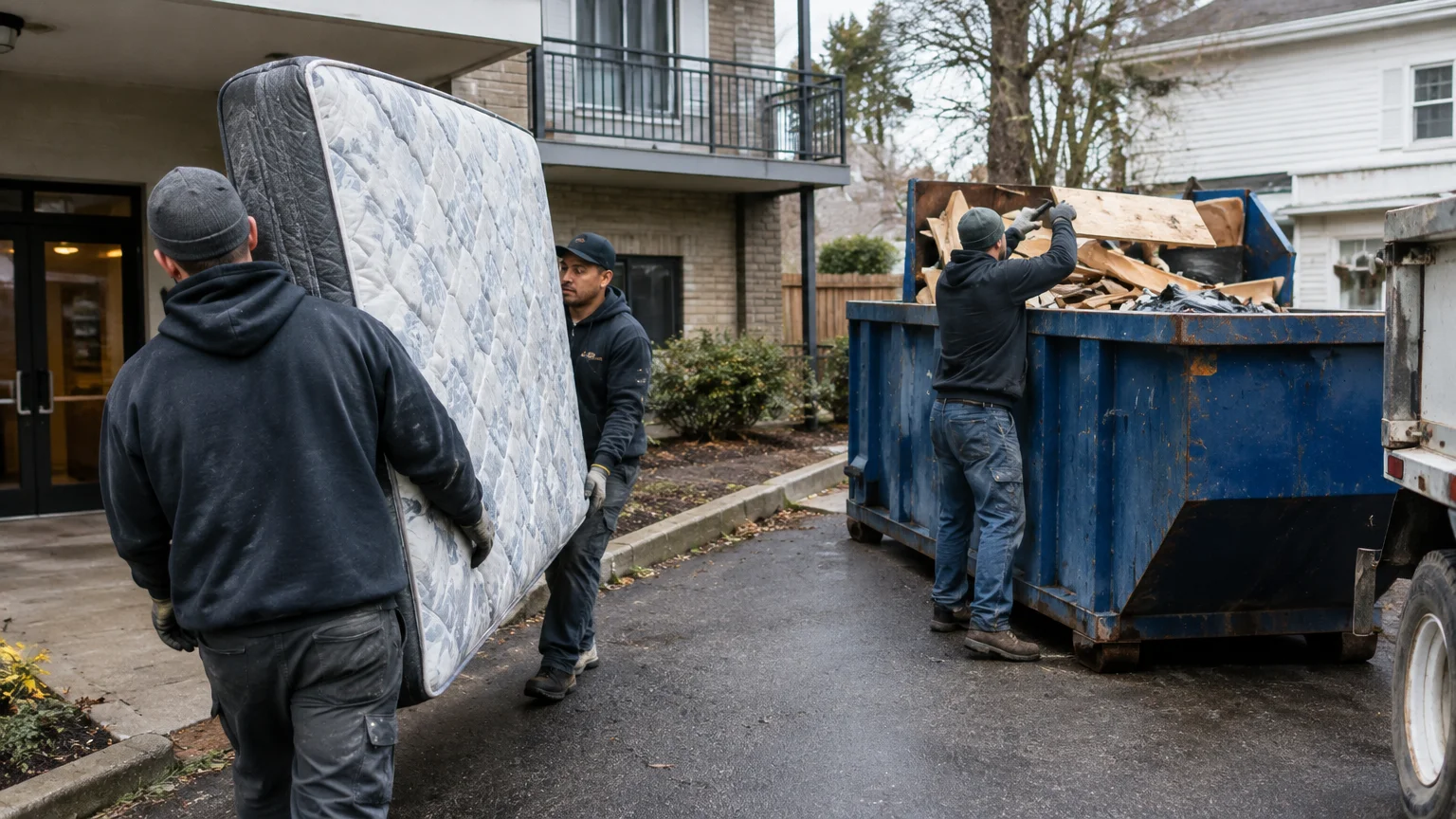
Homes often need pickup after a new mattress arrives or a room changes use. Apartments may have strict rules for dumpsters, loading zones, elevators, and hallways. A scheduled crew can reduce the time bulky items remain in shared spaces.
Landlords and property owners may choose pickup between tenants. A crew may remove mattresses, frames, dressers, and other accepted furniture in one visit. This can help prepare the unit for cleaning and repairs.
For a small home project, pickup may be easier than placing a container in the driveway. It avoids blocking parking. It also keeps the removal focused on the items that need to leave.
What works best for offices, rentals, and property turnovers?
Offices may have mattresses in staff housing, furnished rentals, hotels, or temporary work areas. Property managers may need to remove several beds after a renovation or move-out. List every item before booking.
A larger cleanout may include desks, chairs, electronics, boxes, and furniture. A dumpster may work when staff can load items over several days. Professional pickup may work better when the property must be cleared quickly.
For a business, timing matters. Items left in halls, loading areas, or vacant units can slow other work. Commercial Junk Removal and Office Cleanout may help when bed removal is part of a wider property project.
How Do You Choose the Right Bulky Bed Removal Option?
The right option depends on item count, access, timing, labor, disposal rules, and space. Pickup is often practical for a few beds or difficult access. A dumpster may fit a larger project with many approved items and a safe loading area.
Think about who will do the work. Then think about where each item will go. These two questions often make the better choice clear.
What should a practical comparison checklist include?
Customers can compare the options by asking:
- How many mattresses, frames, and other items must leave?
- Can the customer safely carry everything to the container?
- Is there room for a dumpster and delivery truck?
- How long will the project take?
- Does the provider accept every planned material?
- Does the property have stairs, elevators, gates, or narrow halls?
- Is reuse or recycling available for any items?
A single mattress in an upstairs apartment often points toward pickup. A whole-house cleanout with furniture and approved debris may point toward a dumpster or larger removal service.
A short project may not need a container. A long project may need one. Always compare the lifting work and disposal rules before deciding.
When should a customer contact a local removal professional?
Ask for help when the mattress is heavy, damaged, hard to reach, or inside a shared building. Help can also make sense when several bulky items must leave at once. The provider can explain access needs and accepted materials.
Local knowledge matters because disposal rules vary. Flagstaff AZ Junk Removal serves Flagstaff and can discuss mattress removal, bed frames, furniture, and related bulky items. Describe the job clearly so the removal plan matches the property.
Frequently Asked Questions
How can someone get rid of a mattress near me?
A person can contact a local mattress removal provider, check city collection rules, or look for a nearby recycling or donation program. The mattress condition and local acceptance rules matter. Pickup is often useful when the mattress is inside a home, apartment, office, or storage unit.
Where can someone take an old mattress?
An old mattress may go to a recycling center, donation group, transfer station, landfill, or private removal service. Each location has its own rules. Confirm acceptance, hours, preparation needs, and possible disposal charges before making the trip.
Can a mattress go in a rental dumpster?
It can only go in a rental dumpster when the provider allows it. Some companies accept mattresses, while others require separate handling. Name every planned item before delivery and ask about wrapping, placement, fill limits, and banned materials.
Is a dumpster or pickup better for a bed frame?
Pickup is often easier when the frame is inside a home or apartment. A dumpster may work when the frame is already outside and other approved debris must be loaded. Sharp edges and heavy parts make safe lifting important in either case.
Does mattress removal include a box spring?
Many mattress removal providers can take a box spring with the mattress, but confirm this before scheduling. List the box spring separately because it adds size and weight. Bed frames, rails, and slats should also be included in the item description.
Key Takeaways
- Pickup is often best for one or a few bulky beds.
- A dumpster may fit a longer, larger cleanout.
- Acceptance rules vary for mattresses, frames, and other waste.
- Stairs, narrow paths, and lifting needs affect the safest choice.
- Customers should confirm service details and disposal rules before booking.
Conclusion
Mattress pickup vs dumpster rental is mainly a choice between easier service and container flexibility. Pickup can handle the carrying and loading of beds from inside a property. A dumpster can support a larger project that lasts several days, but you must handle the work and follow rental rules.
The best choice depends on the number of items, access, safety concerns, timing, and disposal options. For local help with a mattress, box spring, bed frame, or other bulky furniture in Flagstaff, Contact us to arrange a removal plan.
If you are not sure what you are dealing with, it is worth having someone look at it before it turns into a bigger job. Get in touch with Flagstaff AZ Junk Removal today and we will tell you where you stand.